N.B. This was built for a Semiquincentennial competiton.
Semiquincentennial Competition
Colophon and Artist’s Statement
This archival sketchbook/journal is sewn from 100 gsm Hahnemühle Ingres mouldmade paper from Dassel, Germany, made on the same site since 1584. It is sewn with Irish linen thread in the linked stitch pattern that was developed by the ancient Copts. This stitch allows the book to lie open easily at any page.
The book’s boards are wrapped a paper vellum facsimile of the United States’ Declaration of Independence from the United States’ National Archives, visible behind it is a line drawing of the eye and pyramid from the American dollar bill. It symbolizes omnipresent watchfulness, the minimum requirement of a well-run democracy.
The book is half-leathered in Alran French goatskin that was processed at Rocky Mountain Leather Supply in Sandy, Utah. Its endbands and bookmark are goatskin.
Treasure binding began with monks in the 6th Century who would encrust volumes with jewels to demonstrate their worth to a largely illiterate populace. During the Renaissance, there was a resurgence in treasure binding. This is a contemporary revival of the treasure binding in which a lucky charm has been embedded in the cover of this book.
The talisman in this book is a 1976 American one dollar coin, a relic from the country’s Bicentennial. If you remember that, you’ve been witness to 20% or more of this country’s history.
N.B. This was built for a Semiquincentennial competiton.
Semiquincentennial Competition
Colophon and Artist’s Statement
This archival sketchbook/journal is sewn from 100 gsm Hahnemühle Ingres mouldmade paper from Dassel, Germany, made on the same site since 1584. It is sewn with Irish linen thread in the linked stitch pattern that was developed by the ancient Copts. This stitch allows the book to lie open easily at any page.
The book’s boards are wrapped a paper vellum facsimile of the United States’ Declaration of Independence from the United States’ National Archives, visible behind it is a line drawing of the eye and pyramid from the American dollar bill. It symbolizes omnipresent watchfulness, the minimum requirement of a well-run democracy.
The book is half-leathered in Alran French goatskin that was processed at Rocky Mountain Leather Supply in Sandy, Utah. Its endbands and bookmark are goatskin.
Treasure binding began with monks in the 6th Century who would encrust volumes with jewels to demonstrate their worth to a largely illiterate populace. During the Renaissance, there was a resurgence in treasure binding. This is a contemporary revival of the treasure binding in which a lucky charm has been embedded in the cover of this book.
The talisman in this book is a 1976 American one dollar coin, a relic from the country’s Bicentennial. If you remember that, you’ve been witness to 20% or more of this country’s history.

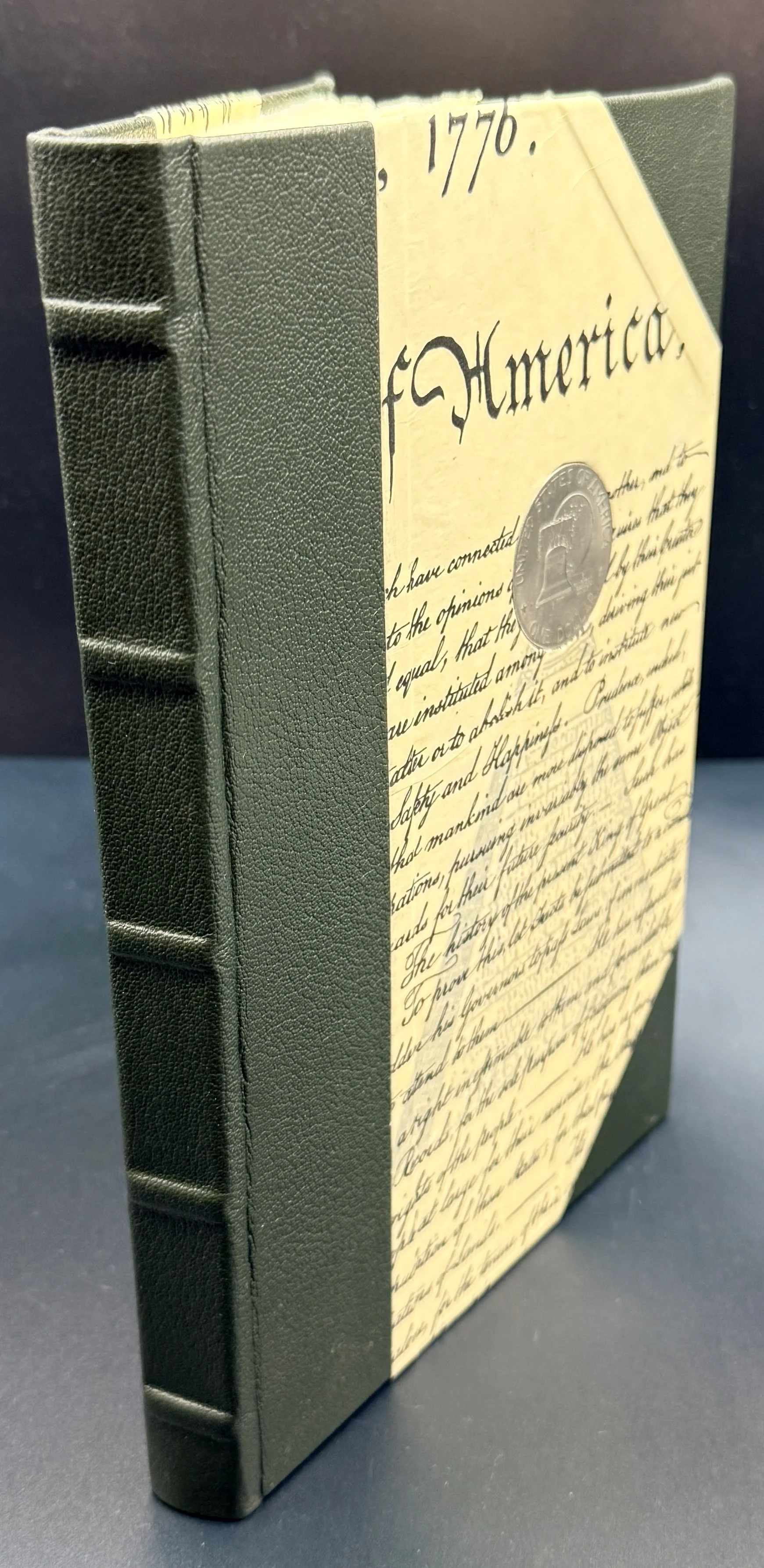 Image 1 of 11
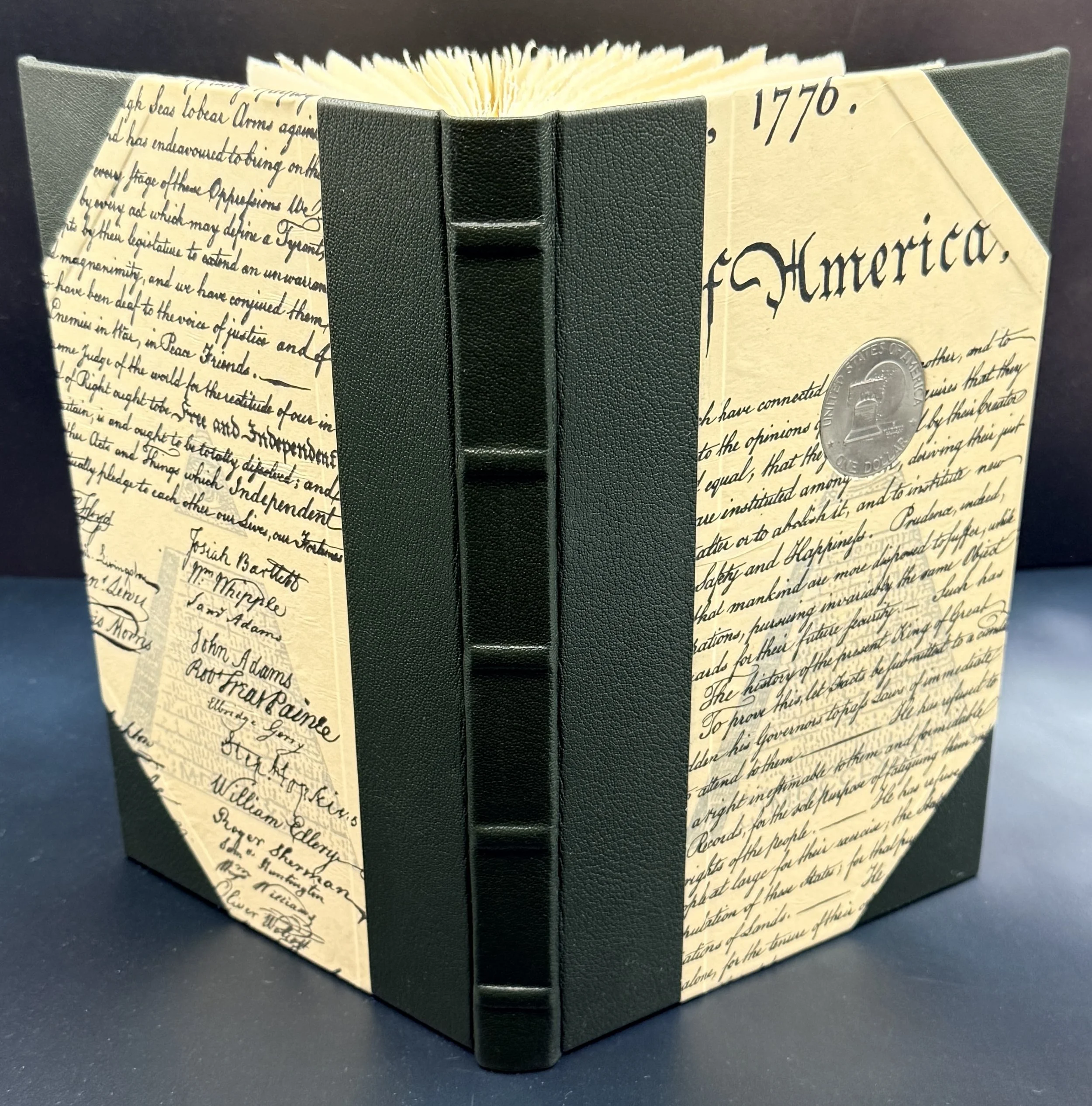 Image 2 of 11
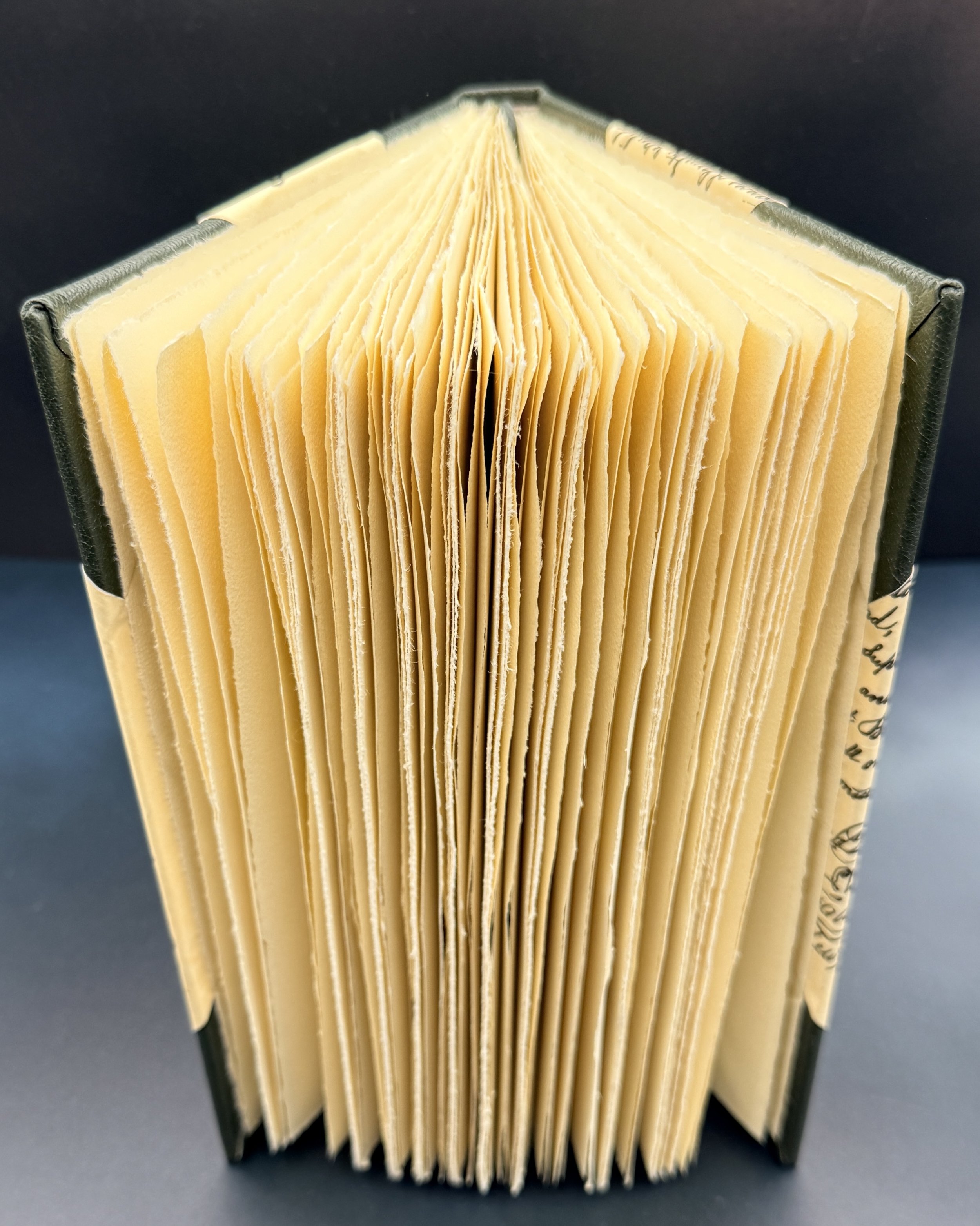 Image 3 of 11
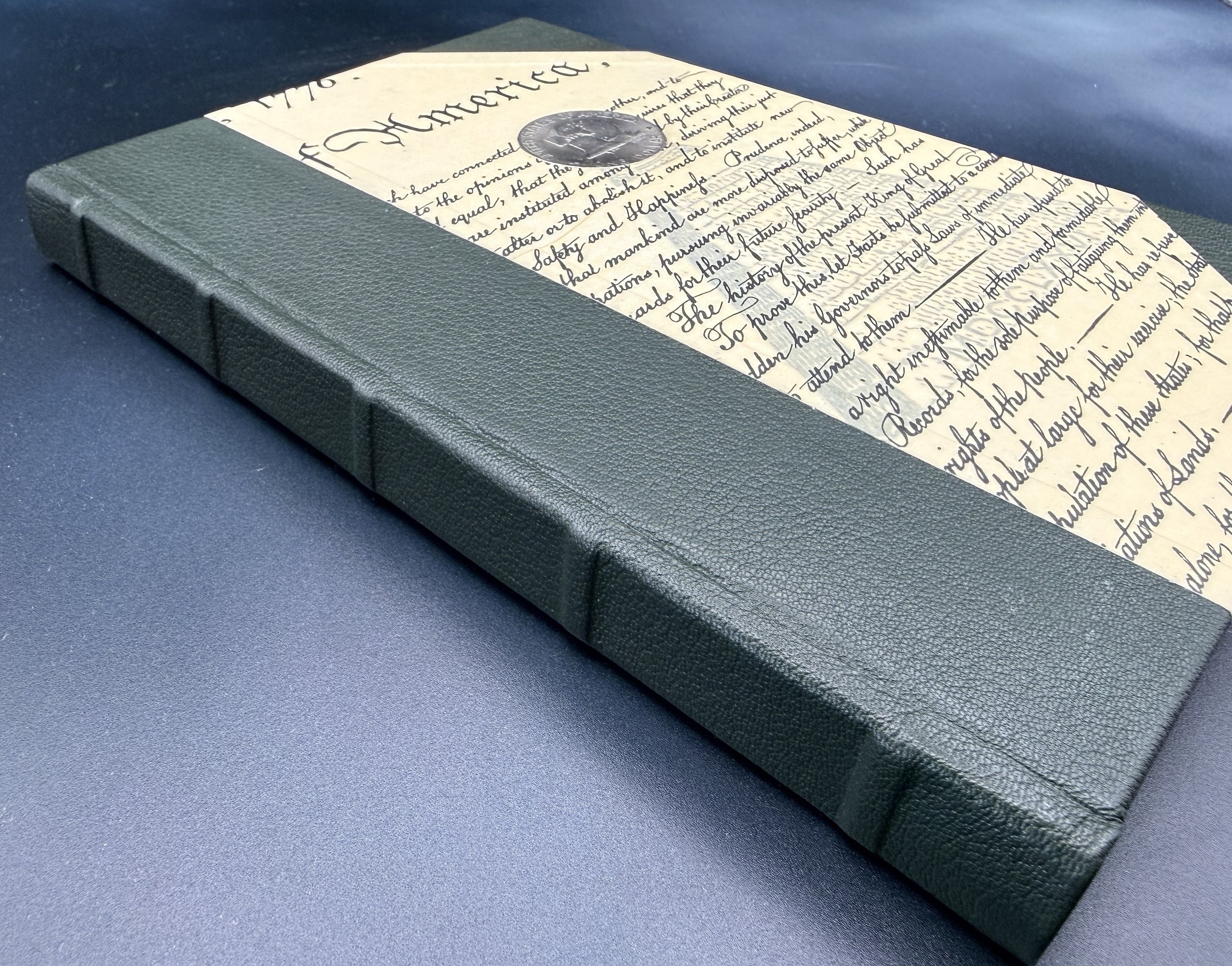 Image 4 of 11
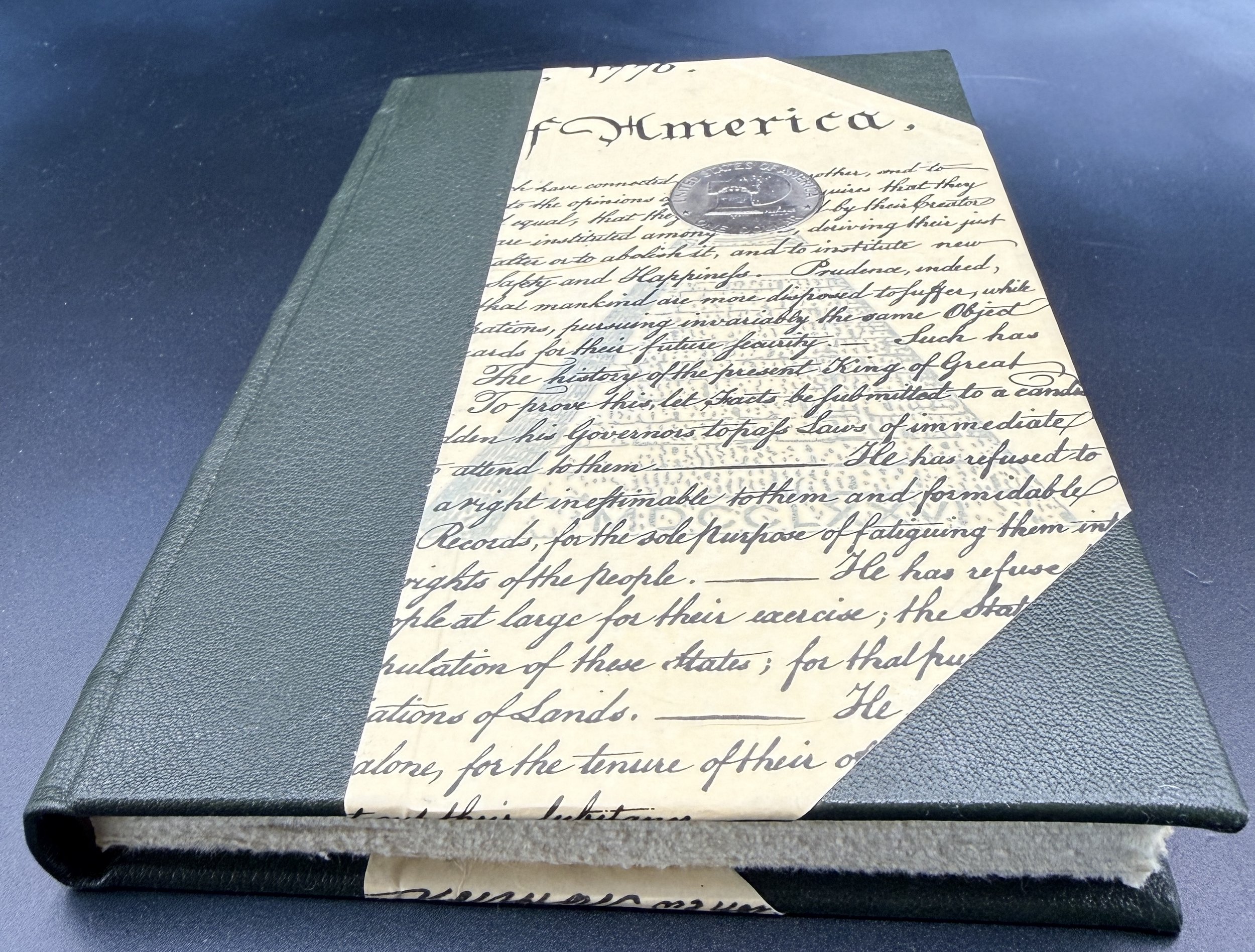 Image 5 of 11
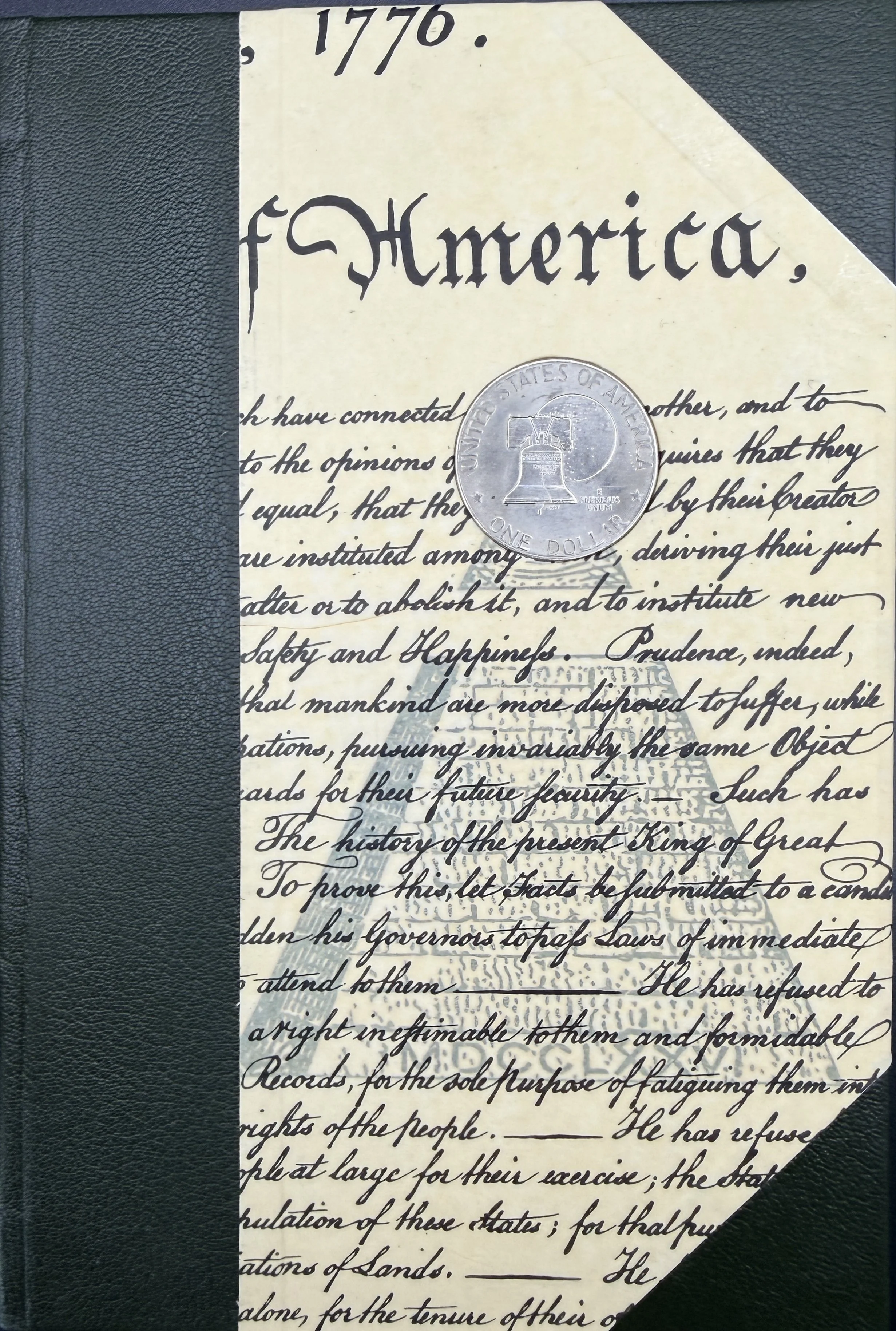 Image 6 of 11
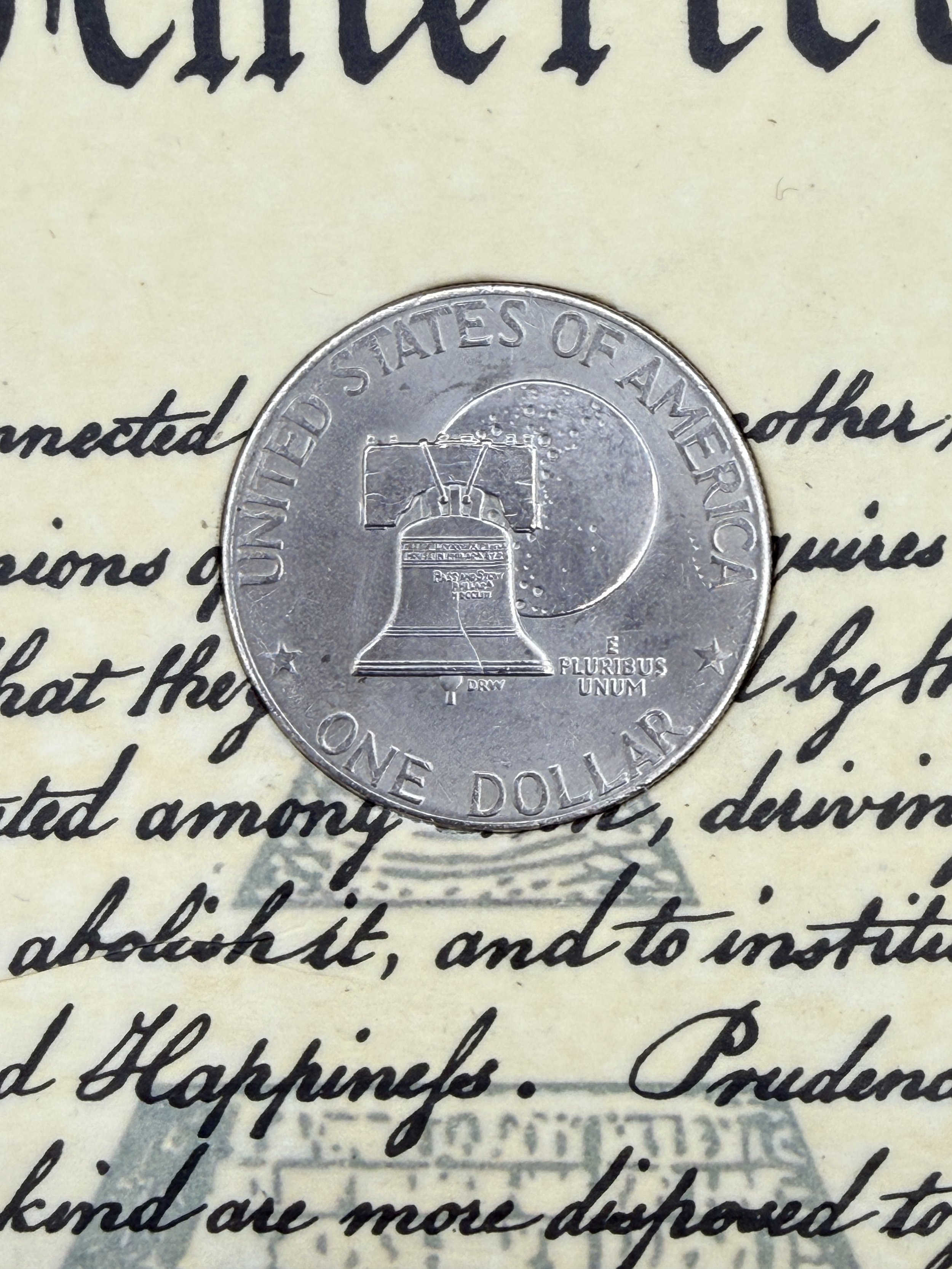 Image 7 of 11
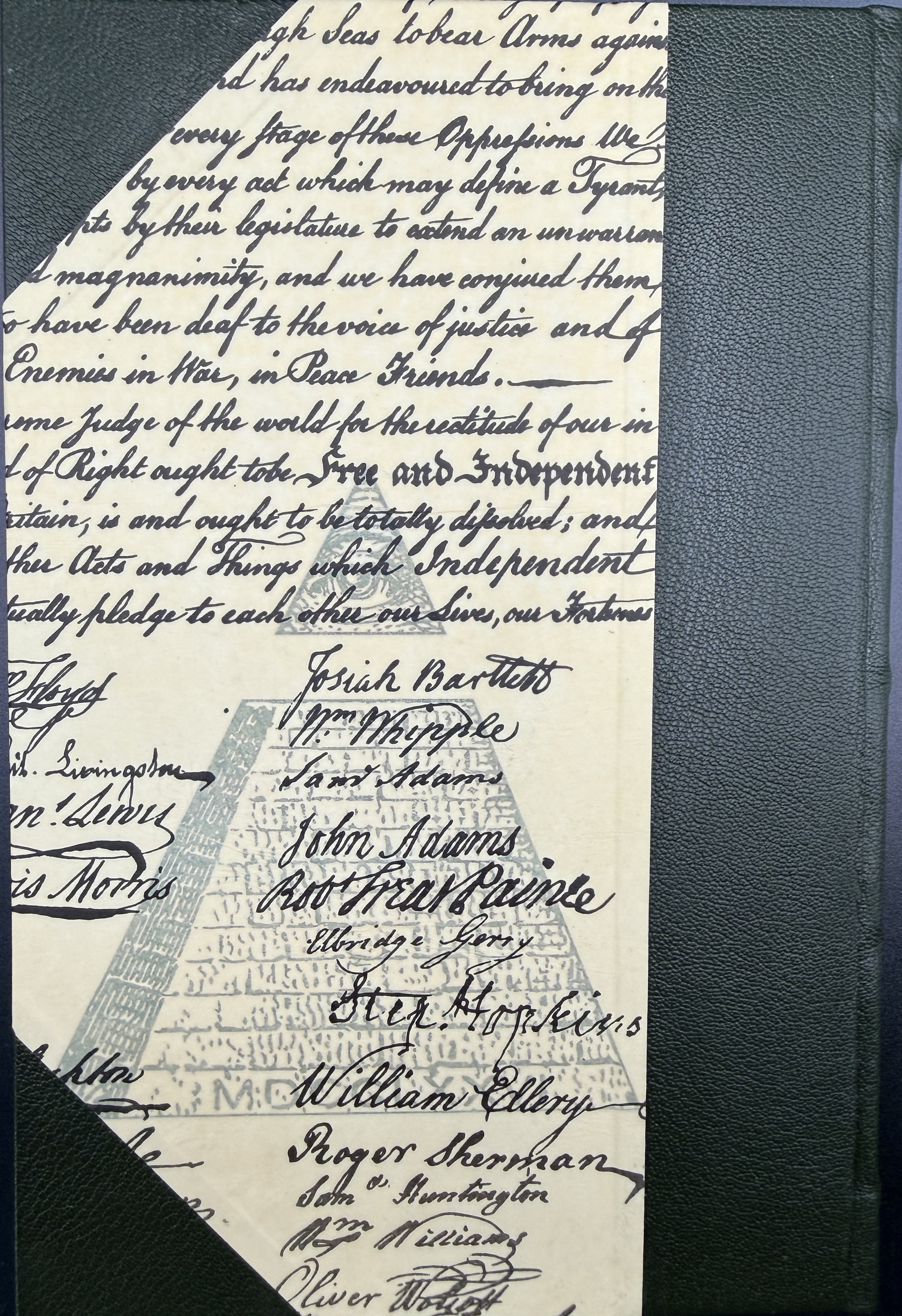 Image 8 of 11
 Image 9 of 11
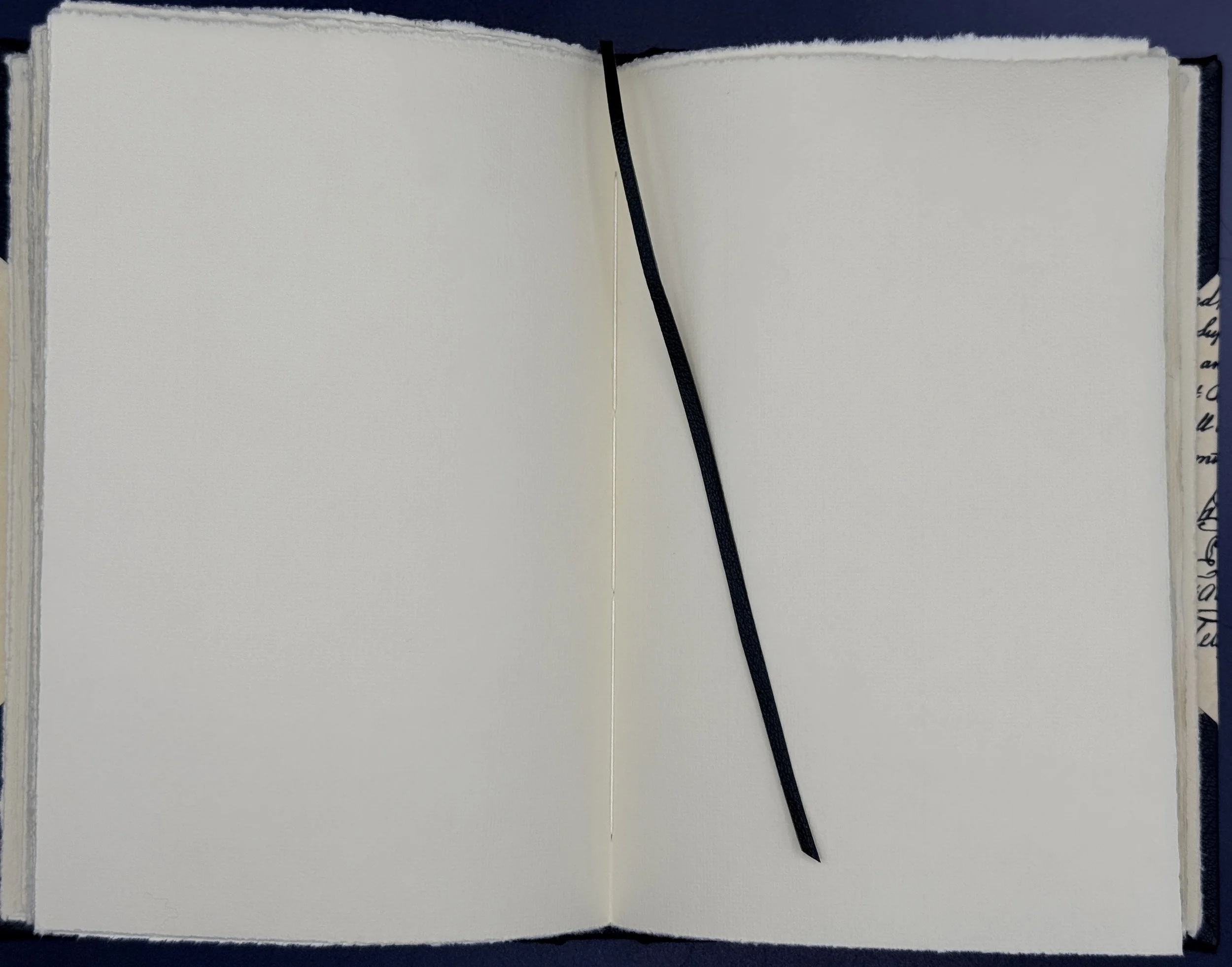 Image 10 of 11
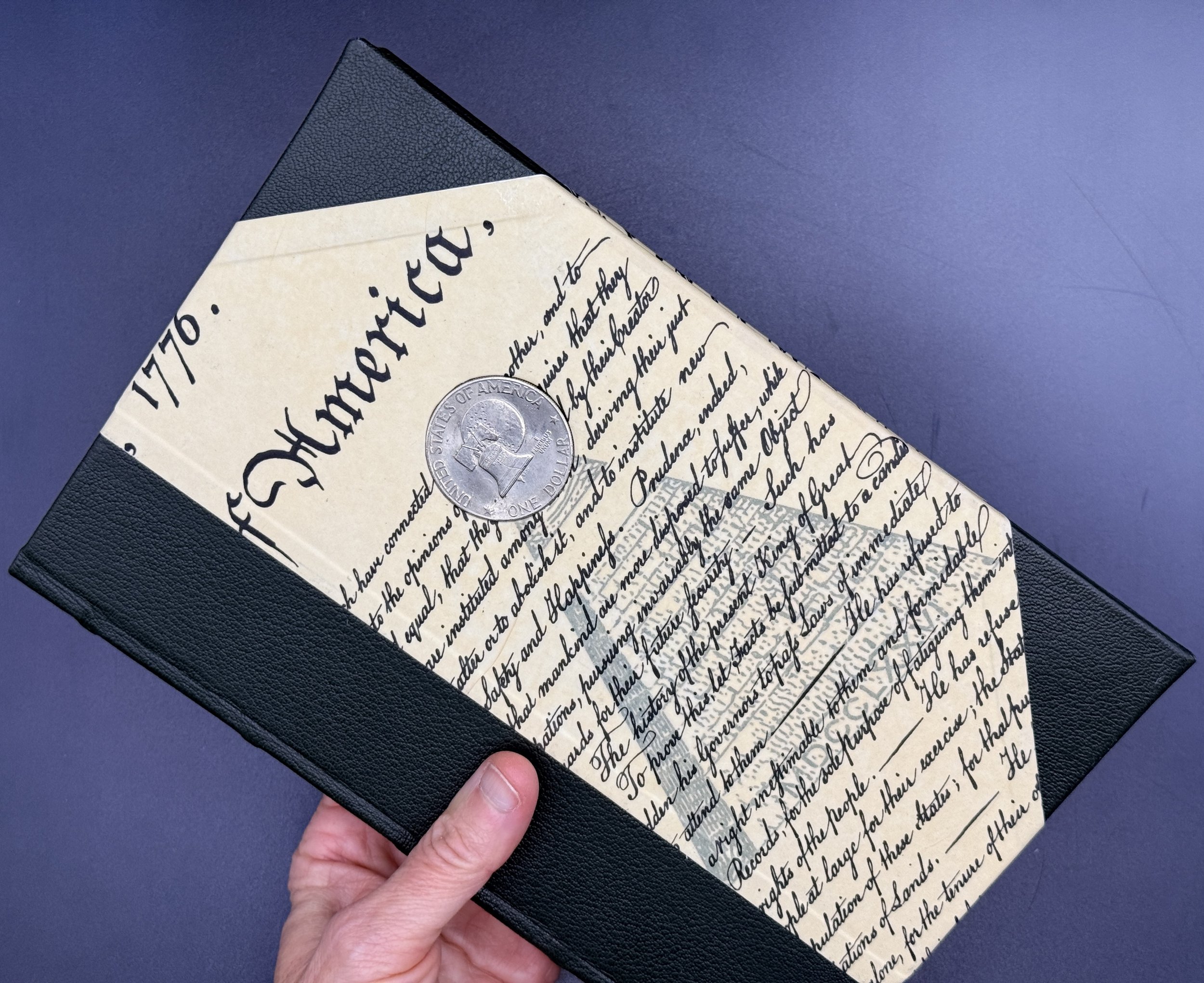 Image 11 of 11